In light of the major Conference League final in which Rayo Vallecano participated, the research team shifts its focus beyond the pitch. In an era of hyper-commercialized, multi-billion-euro football, Rayo stands as a global case study of social identity and grassroots economic resistance.
To understand Rayo, one must look at Vallecas, a traditionally working-class, immigrant-rich neighborhood in Madrid. During the 1950s and 60s, when state support was absent, residents survived through mutual aid, building their own infrastructure.
This DNA of collective survival was carried directly into the stands. In sociology, Social Identity Theory explains how people unite around shared values. For the residents of Vallecas, Rayo is not merely a football club; it is a mirror of their class pride.
The culture of the club’s supporters (Rayistas & Bukaneros) is not limited to slogans; it is defined by actions that transcend the realm of sports:
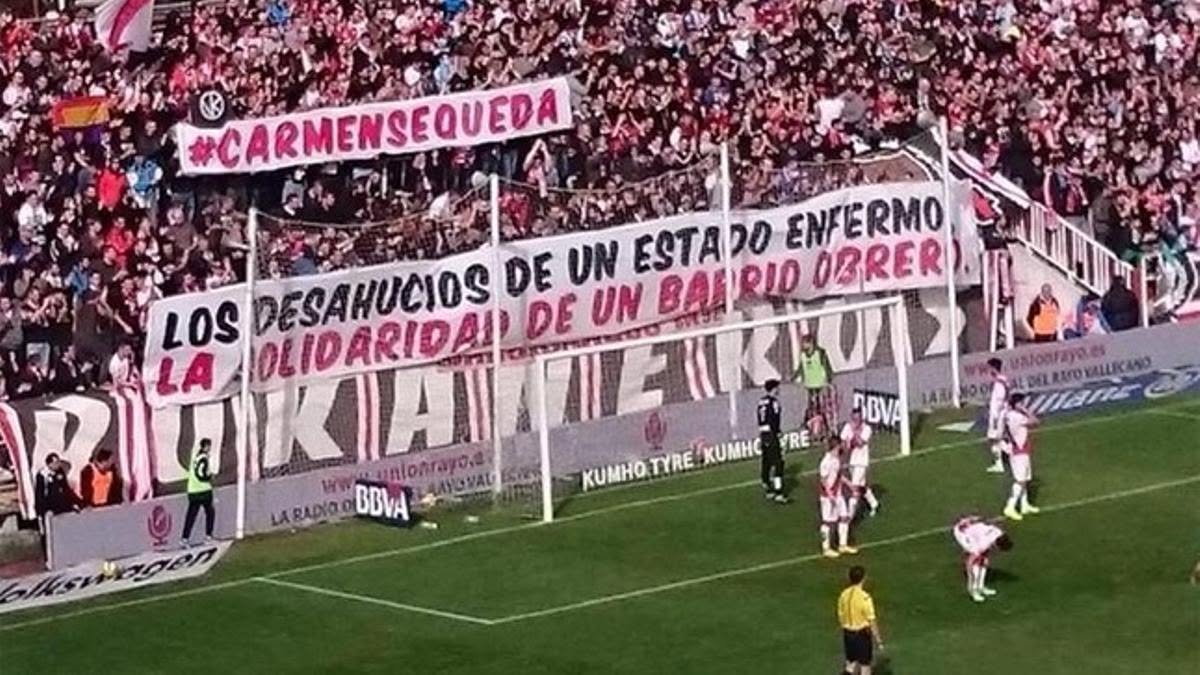
• The case of Carmen Martínez Ayuso (2014): When 85-year-old Carmen lost her home to eviction, the fans rallied to her aid, and the club’s management officially committed to covering the rent for a new home for the rest of her life.
• The Zozulya case (2017): Pressure from the fans led to the cancellation of the transfer of a Ukrainian footballer with documented neo-Nazi ties—proving that the values of the neighborhood are not for sale.
• The rainbow jersey (2015–2016): Reflecting the ethos of its supporters, the club unveiled an away kit featuring a rainbow stripe. Each color represented a social cause championed by the fans: red for those battling cancer, orange for people with disabilities, yellow for depression, green for the environment, blue for child abuse, and purple for gender-based violence. A portion of the proceeds from sales was donated to the corresponding organizations.
From an economic perspective, Rayo survives in La Liga competing against colossal, powerhouse clubs by relying on an alternative model of sustainability. Its strength does not stem from foreign investment funds, but rather from the intangible capital of its loyal community, which keeps a close watch on the club’s management to safeguard its social character.
Rayo Vallecano reminds us that sports do not develop in a social vacuum. When clubs remain a vibrant part of society, they become vehicles for justice and solidarity.
For us, the case of Rayo is more than just a case study; it is living proof that social solidarity and human values can stand firm and prevail, even within the most highly commercialized environments.
¡Aúpa Rayo! ⚡ Pride and Resistance
📸 The photo shows the supporters’ stand of Rayo Vallecano at the Vallecas stadium. The central banner reads: “Los desahucios de un estado enfermo, la solidaridad de un barrio vivo” — “Evictions by a sick state, solidarity from a living neighborhood.”